Showing posts with label Dachau. Show all posts

Saturday, April 14, 2018

TToT: European Sensibilities

Last night I attended the annual Holocaust Remembrance Service at our local temple. Afterwards, I went through old photographs I took during our visit to Dachau Concentration Camp in Germany.  I also ran across this Ten Things of Thankful post I wrote shortly after that visit and decided it was worth a second look.


Ten things the Europeans reminded me for which I am grateful…
SUVs and huge club-cab vehicles are a choice, not a necessity.

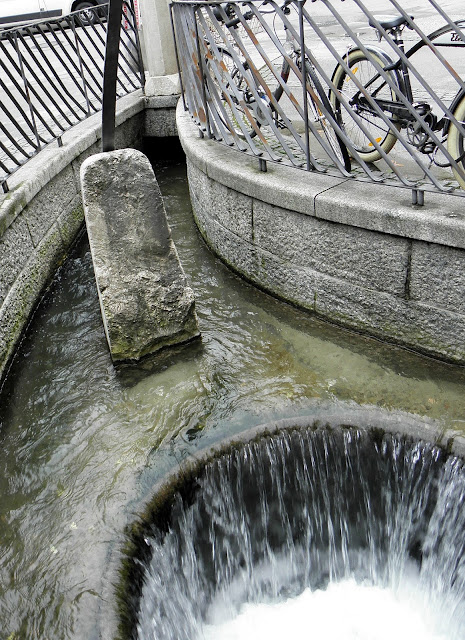
Water should be preserved.


(Run off from the mountain is captured in Salzburg, Austria.)

A person should walk—for his or her own good as well as the planet’s.


Beauty all around us improves life.
(Konstanz, Germany)


You make yourself rich, by keeping your needs few. (Apologies to Thoreau who said this better.)
             (Sweet little home amid multi-storied buildings in Lindau, Germany)

Honor those who have gone before you.
(Every grave we saw in Germany and Austria was immaculately kept no matter its age.)

Laugh much.
          (Top of a carousel at the Christmas market in Friedrichshaffen, Germany)

Celebrate what you have.
       (Scene on the famed Glockenspiel of Munich depicting a dance celebrating the     survival of those who made it through a dread disease that devastated the city.)


Do not let the past define you.
(Dachau, Germany Concentration Camp)

Make your faith known.
(Church in Liechtenstein)


Prayer from last night's memorial service...

Fully Compassionate God on high:
To our six million brothers and sisters murdered because they were Jews,
grant clear and certain rest with You
in the lofty heights of the sacred and pure
whose brightness shines like the very glow of heaven.

Source of mercy:
Forever enfold them in the embrace of Your wings;
secure their souls in eternity.

Adonai: they are Yours.  They will rest in peace.
Amen


Monday, May 9, 2016

Light in the Darkness of Dachau


Spoiler alert:  If you hope to visit Dachau some day and want to experience the memorials without any preconceived expectations,  don't read further.  I share not only photos, but interpretations of the message conveyed in each memorial as I understood them.  After the heavy sadness and disbelief of what we had seen in the camp,  I was very moved to discover the strength and faith that was palpable in each of the memorials at the end of the tour.

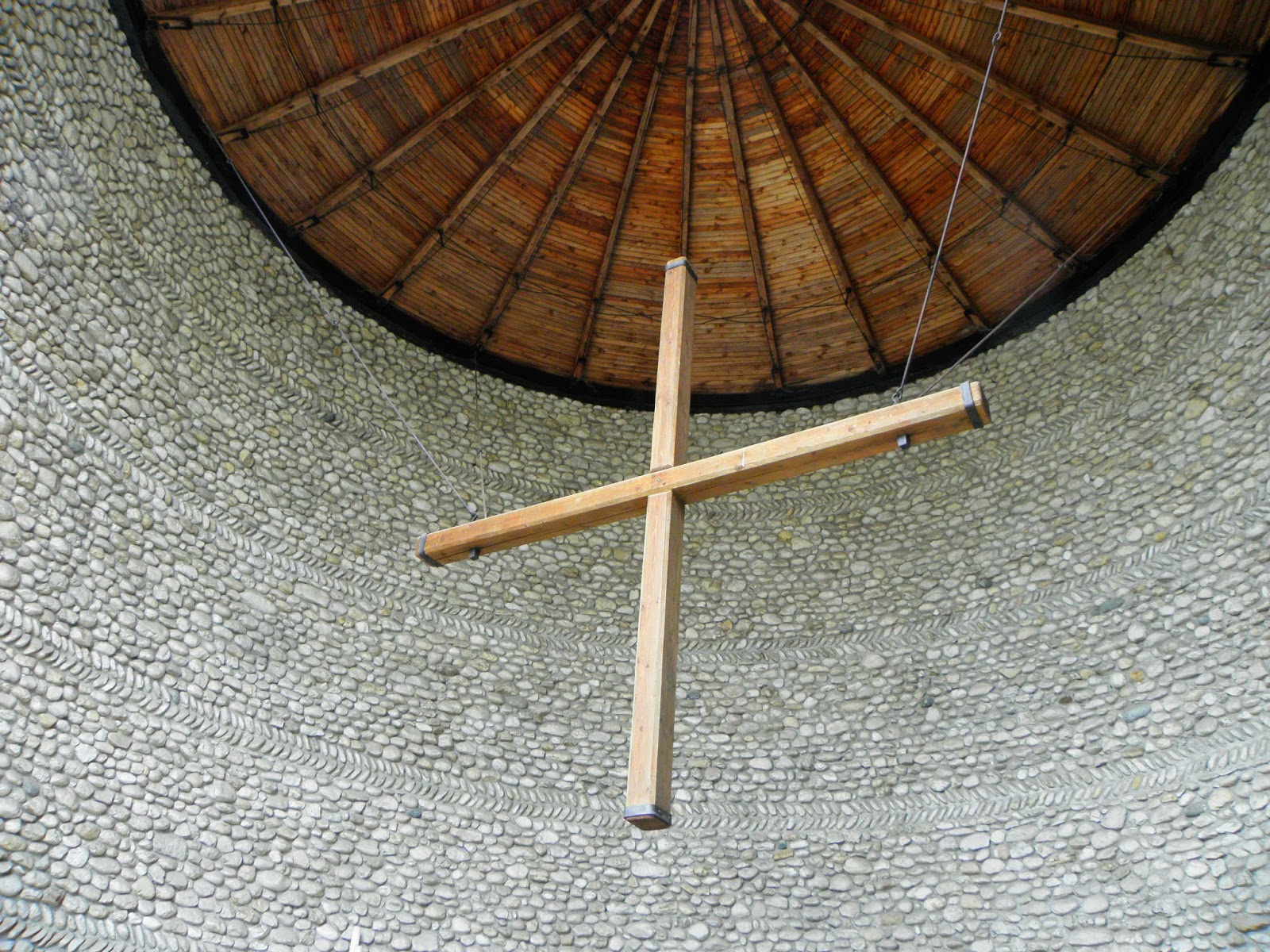
As you walk to the end of the gravel road that ran between the rows of barracks that housed prisoners, you arrive at the gathering of memorials.  The first is a Catholic memorial: Church of the Mortal Agony of Christ.  Many of the prisoners at Dachau were Catholics from Poland, Italy and France imprisoned for their anti-Nazi stance and resistance efforts.  The structure is concrete covered both inside and out with rocks from a nearby river.  A metal sculpture depicting Christ's crown of thorns hangs overhead in the entrance, and a cross hangs over an altar inside the structure.


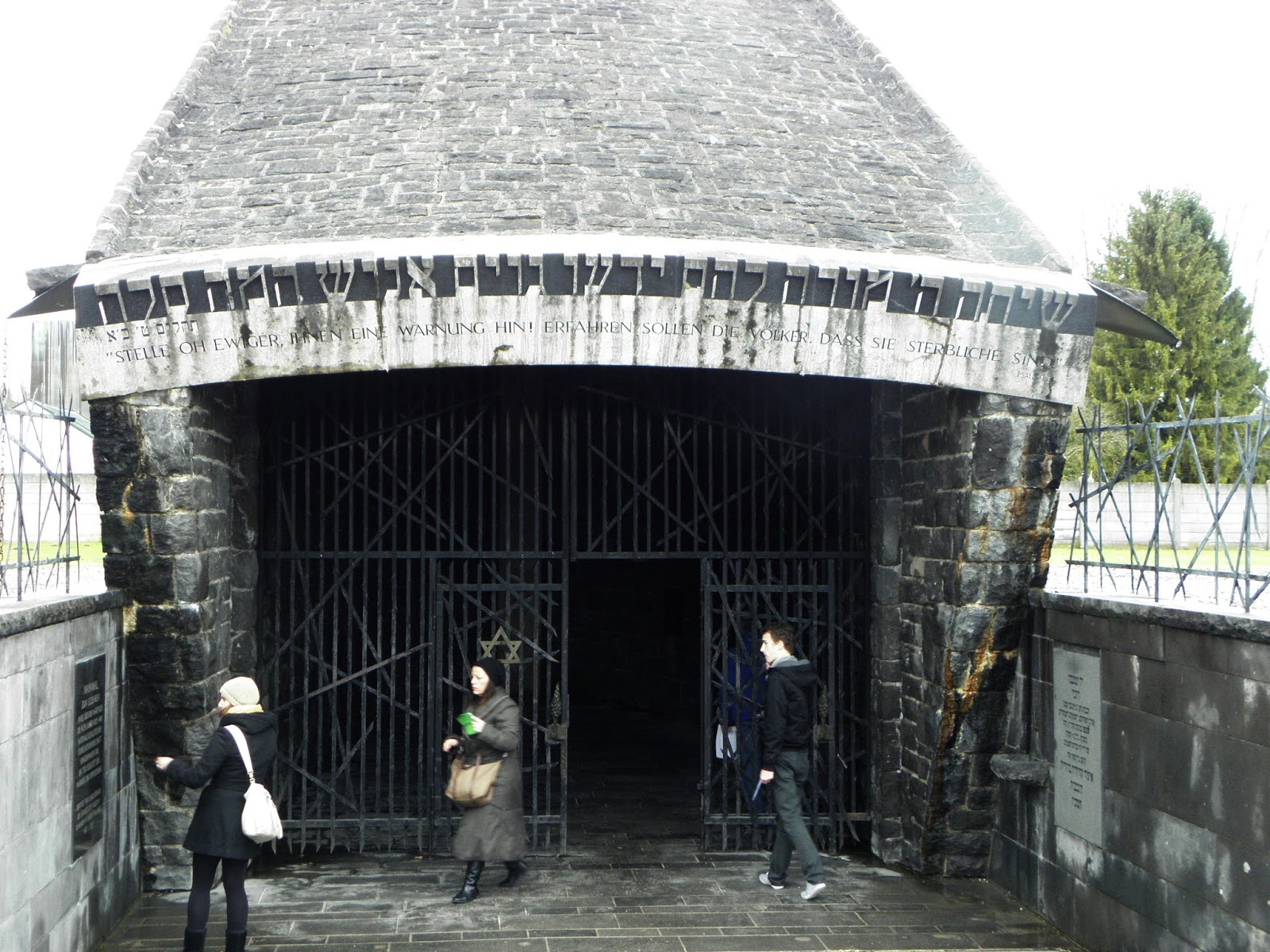
The Jewish memorial was my favorite, though at first it seemed foreboding.  It is built of basalt lava, giving it a dark almost dingy look.  The floor of the interior is six feet underground which made me wonder if it was meant to signify the grave.  Instead, the underground positioning is a reminder of those who attempted to find hiding places from the Nazis.  You descend a wide ramp into the memorial.  Overhead is a railing that provides a clear reminder of the barbed wire enclosing Dachau.


I went down the ramp into the memorial with some reluctance.  Once inside I immediately saw the shaft of light from the topmost point of the prayer room illuminating a pillar of marble.  It took my breath away as I understood what the architect was saying-- the Holocaust pulled us down into the deep pit, the darkest depths of despair, yet even then there was hope and the promise of salvation.


The Church of Reconciliation is a haphazard looking structure made of gravel and unfinished concrete.  It stands as a protest against the Nazi insistence on order and tradition.  It is the Protestant memorial at Dachau.  After all we had seen and heard that day, it provided a much needed chance to light a candle and pray.


The Russian Orthodox Chapel: Resurrection of Our Lord was built on the 50th Anniversary of the liberation of Dachau by American soldiers.  It sits atop a mound of soil brought in from the Soviet Union, and honors the roughly 6,000 Russian prisoners who died here.


Thoughts from the Service of Remembrance at Temple Beth Sholom Topeka, Ks  Friday, May 6, 2016

If we were to begin tonight counting off each second of time in honor of someone who was killed during the Holocaust, we would need to continue counting seconds until August of this year.


The good suffer and the best suffer most, because it is the just and the true and the righteous that take upon themselves the task of bringing justice and truth into the world.


As we recall their unanswered cries, we must pledge ourselves never again to be silent in the face of tyranny or injustice.  We must transform grief into compassion.  We must give evidence of our remembering them through acts of kindness and courage.  Thus will our actions serve as monuments of the spirit to those who perished.  

Sunday, May 8, 2016

Dachau, Germany


More views of Dachau Concentration Camp.
Guard tower, concrete fence posts with barbed wire,  a shallow ravine (below, left side of fence), and another concrete fence (below, to the right of barbed wire fence).

The ground covered in rocks is difficult to walk on, making escape unlikely.


Inside one of the thirty barracks that stood on the grounds.  Bunks were three high with fifteen bunks on each level.  When the camp was "not overcrowded" each barracks was designed to house one hundred eighty prisoners.   These modest accommodations were intended to house 5,000 prisoners in the entire camp; after 1942  12,000 prisoners were housed here.


Lockers for individual prisoners and stools stacked atop each.

Community wash basins.

Ten toilets per barracks. Zero privacy.

The area above and below once held the barracks in parallel rows.


Another area of concrete fence and barbed wire which still stands just past the Memorial site.

At the Holocaust Remembrance service last Friday night an Austrian-American woman shared the story of her family's attempts to flee Vienna when she was a girl.  She told about the Judenstempel, a red J the Nazi's stamped onto the passports of all Jews.  Very few countries admitted immigrants with that red Judenstempel.  Many Jewish families were forced to leave behind any material possessions when they escaped.  The resulting poverty also limited where they might take refuge.  The woman and her family went to the closest safe place that would have them, Shanghai.  She said that about 20,000 Jews gathered in Shanghai during the Holocaust.  Eventually, Japan gained control of Shanghai and bowed to German pressure to round up the Jews.  Her family and friends spent time in an internment camp there, but she was adamant that her personal ordeal paled in comparison with that of the people imprisoned in the concentration camps of Germany. Eventually, the Allies prevailed, and she married an American solider.  They came to America where they raised a family, and enjoyed a good life.  It was clear as she spoke that she never took any of her good fortune for granted.  

Saturday, May 7, 2016

TToT: Never Again

My husband and I were both asked by young people at our church to serve as their Confirmation mentors.  All semester we have been studying not just our own Methodist faith, but other faiths as well.  Last night our group visited Temple Beth Sholom to observe with our Jewish neighbors a Service of Remembrance for Victims of the Holocaust.  The service was tremendously moving and caused me to think back to the day a year ago my husband, son and I spent at Dachau, a former Concentration Camp in Germany.

The first glimpse of Dachau as you walk up a gravel road in the quiet countryside of Bavaria. I suppose the guard tower should have been a tip-off, but I was still stunned by the horror of what took place in the midst of this seemingly sleepy little village.

Historical photos of the main entrance gate show a swastika hung on the now unadorned keystone.

In the center of camp is an open area where prisoners would be summoned for roll call and forced to stand at attention for inhumane  lengths of time.  There are stories of prisoners holding up their dying friends and loved ones during these times so that they would not be punished for missing the summons.


Nandor Glid's sculpture graphically depicts the concrete fence posts, barbed wire, and broken bodies of the camp.  Below the sculpture, the wall bears the years that Dachau served as a concentration camp-- 1933-1945.


International Monument:  The triangles represent the badges worn by different groups of prisoners.  Red-Socialists, Communists, and political prisoners; Blue-foreign workers, mostly Poles; Jews-two triangles, yellow atop another color; Criminals-green; Black- the homeless; Pink-homosexuals; Brown-Gypsies; Purple- Jehovah's Witnesses.  The red circles were a second badge that those who worked in the camp penal colony were forced to wear.  The three large links stand for the unity connecting all the prisoners.

For Mother's Day from your, Hans


How could I not feel thankful for my life after seeing a tiny glimpse of what prisoners in a place like this went through?
Ten Things...
Freedom--physical, ideological, spiritual and  freedom from abuse
Peace--inside and outside my home
Liberty
Speech that heals rather than divides
Faith
And Mothers